Our series Eco HomeLife has been designed to answer your questions about sustainability and explain concepts and terms. In this edition we ask: is food waste bad for the environment?
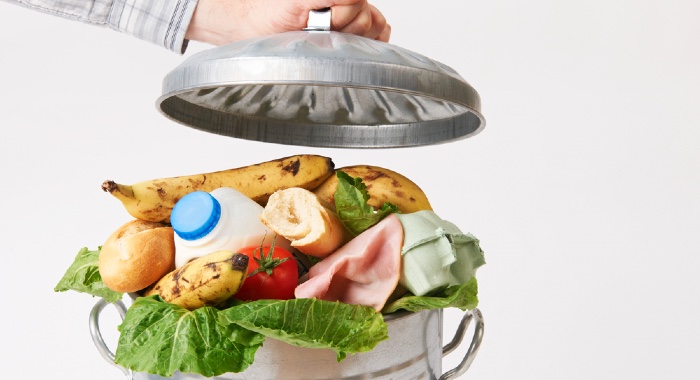
We’ve all been there: as you put the groceries you just bought in your fridge, you throw out what’s left from the week before.
According to WRAP, we throw away 4.4 million tonnes of edible food every year in our homes in the UK. This is an average of three meals per person.
Globally, 33% – 40% of food is wasted, according to WWF. This waste doesn’t just cost money, it’s also bad for the environment, for 3 main reasons (Amicarelli et al., 2021):
- Wasted resources
- Unnecessary environmental impact from food production
- Greenhouse gas emissions of food in landfill
Let’s delve into it and find out why food waste is bad for our planet.
Unused Food Wastes Precious Resources

Producing food requires many natural resources, especially land/soil, fossil fuel energy and water. A study reported that food production uses 30% of land/soil, 20% of fossil fuel energy and 70% of fresh water. (Nonhebel, 2003, Ingrao et al., 2023)
Water is essential to sustain life on Earth, so it’s one of the most precious resources. Huge demand on water resources are already causing shortages, which are exacerbated by climate change, which is responsible for heat waves and droughts.
So using water to produce food that is then wasted means we waste this precious resource. This in turn has a huge impact on our environment. But it also means more food has to be produced to replace what has been wasted, needing more water.
It’s the same story with the other resources too. With more food needed more land to grow/rear it is needed. This leads to deforestation, which is one of the many drivers of climate change. (Sevilla et al., 2025)
And if we throw out perfectly edible food and buy it new, we increase demand, which increased the pressure on land, leading to more deforestation.
Every piece of food that isn’t used wastes precious resources, increasing demand on them and putting huge pressure on our environment.
Food Production Has A Huge Environmental Impact
The practices we use to produce food in today’s world has a big impact on our environment. Meat production is associated with pollution, deforestation, biodiversity loss, high water consumption, and greenhouse gas emissions, among others. (Petrovic et al., 2015)
While smaller, producing plant-based food also has an environmental impact.
Standard farming practices for growing food are responsible for pollution through the use of pesticides and artificial fertilisers, deforestation, biodiversity loss, high water consumption and greenhouse gas emissions. (Gerarda Kok et al., 2026)
Then there are the post-farm impacts that result from slaughtering, processing, packaging, storing, refrigerating, transporting, and distributing. These apply to both meat and plant-based food production.
According to Our World In Data, agriculture is responsible for 26% of global greenhouse gas emissions, and as such is a huge driver of climate change.
Food waste makes all these impacts pointless. And the later in the supply chain the food is wasted, the bigger are the environmental impacts. (Scherhaufer et al., 2018)
Furthermore, avoidable food waste creates unnecessary environmental impacts through over-production and processing, as it increases demand.
Disposal Of Food Waste
There are several ways to deal with food waste, with each having a different environmental impact. The EU’s Waste Framework Directive suggests the following hierarchy to manage food waste:
- Prevent – avoiding food waste in the first place
- Reuse – for example, by using it as animal food or distributing to homeless people
- Recycle – turning it into compost
- Recover – create energy or bio fuel from food waste
- Disposal – sending it to landfill
The first three all prevent the food from actually being wasted. Either by preventing the waste in the first place, or by using it in a different way.
However, only the first is truly without environmental impact, which is why it’s the preferred option in the EU’s framework.
Reusing wasted food is associated with environmental impacts caused by transportation and distribution of the waste, such as carbon dioxide emissions. These will have to be added to the already considerable environmental impacts of producing the food.
Recycling food waste into compost at industrial composting facilities, is another way of using the food waste to prevent it from being wasted. But it also has its impacts on our planet, mostly associated with transportation of the waste. (Al-Rumaihi et al., 2020)
Recovery involves processing food waste to gain energy, in the form of electrify through incineration or anaerobic digestion to create bio fuel. The latter needs a high amount of energy, contributes to global warming and ozone layer depletion. (Batool et al., 2023)
Incineration of waste has a huge environmental impact, being responsible for large amounts of carbon dioxide emissions, pollution with toxic chemicals, and biodiversity loss. It also destroyed valuable phosphorous sources when biowaste is burnt, such as food waste. (Jelinek et al., 2024)
When organic matter, such as food waste ends up in landfill, it degrades quickly and releases methane, a potent greenhouse gas. It’s estimated that 8% of global greenhouse gases come from food waste, most of which is methane released in landfill. (Somers, 2025)
And because nothing of this wasted food is used like in the other waste management methods, all the environmental impacts caused to produce it were unnecessary. No wonder it’s the least favoured option in the EU’s Waste Framework.
Eliminating Food Waste Is The Best Option
With all the above in mind, the direction we have to go is clear: we have to eliminate food waste. Preventing food waste should be on top of our list, as it’s the best option for our environment.
The food industry has to tackle issues such as surplus food production and food loss across its supply chain. At the moment, our food system just isn’t efficient or sustainable.
But given that 60% of all food waste in the UK comes from households, this is where we all can make a big difference. So here are ways to tackle food waste in your home:
- Only buy what you need – make a list before you go shopping and stick to it
- Meal planning – plan your meals in advance so you know what you need and use what you have
- Get creative with “left-over meals” – once a week create a meal from what you have left over
- Keep leftovers for another day – cooked too much? freeze leftovers and eat them another day or have it for lunch the next day
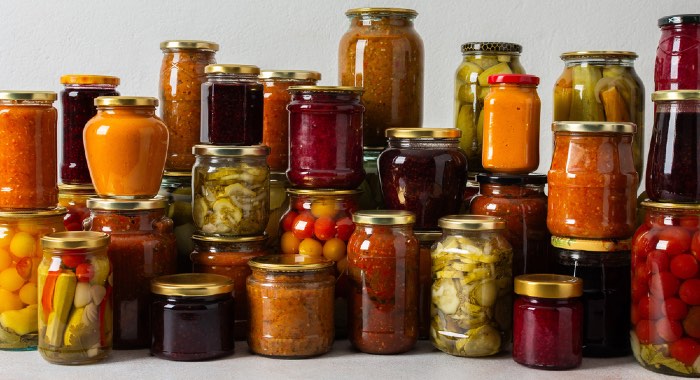
- Preserve the food you can’t eat – pickle, ferment, dry, freeze, etc.
- Eat as much of your fruit and veg as possible – carrots, parsnips, beetroots, kiwi, apples, potatoes, etc. don’t need peeling
- Compost your kitchen scraps – a home compost bin turns kitchen scraps into nutrient-packed compost for your garden or indoor plants
It takes a bit of planning and creativity, but once you get into it, it becomes second nature. And you’ll be astonished by how much you can reduce your food waste by following these tips.
So here you have it, the answer to how is food waste bad for the environment. Why not start your zero-waste living journey by reducing food waste in your home.