In our educational series Eco HomeLife Explains we aim to elucidate terms and concepts around being more sustainable. In this edition we separate facts from fiction and bust some of the most common sustainability myths.
Like with most other things, there are many myths that surround the topic of sustainability. Most of them are widely believed and put people off trying to live a more sustainable life.
With our planet in desperate need of some help, we need as many people to adopt a sustainable lifestyle as possible.
So here are the 10 most common sustainability myths busted.
Sustainability Myth #1: Recycling Will Solve Our Waste Problem

I’ve grown up believing that recycling is the most important thing we can do for our environment. So if we recycle, we do our bit for the planet. But that’s a myth, the truth is much more complicated.
Let’s start with why recycling has an important role to play in a sustainable future (Lamma 2021):
- It reduces the amount of raw materials needed, such as sand, timber, fossil fuels, water, etc.
- The environmental impacts of extracting raw materials fall away, as invasive procedures such as mining aren’t needed
- It reduces energy consumption, as recycling processes are less energy-intense than most manufacturing processes
- It reduces the amount of waste in landfill, as it’s reused to make something new
- Recycling processes release fewer greenhouse gases than making products from raw materials
This all sounds good, but it’s only a part of the puzzle. Recycling alone cannot save our planet from climate change and there are many reasons for this (Balwan et al., 2022):
- Not everything that could be recycled is recycled – lack of appropriate facilities, there is just too much for recycling systems to cope with, contamination renders whole loads unsuitable for recycling, mismanagement/littering, etc.
- Some materials can only be recycled a few times before needing to go to landfill – plastic & paper
- Far too much of our waste isn’t recyclable, including many single-use plastic items
- It encourages people to continue practicing overconsumption and producing waste
So while recycling is a vital part of living a more sustainable life, it’s not the magic solution many people think it is.
If you want to read more about this, head to our blog post about why recycling won’t save our planet.
Sustainability Myth #2: Living More Sustainably Means Buying Eco-Friendly Products

When you research eco-friendly living, you often come across lists of green products to switch to. So it’s no surprise that many people think that this is what it means to live more sustainably.
And while eco-friendly products are part of living a greener life, it’s not the main thing and certainly not the only thing to do. The belief that green consumerism, the act of buying green alternatives, will solve climate change is unfortunately widely spread.
The thing is, the biggest issue is overconsumption and by replacing all the things we buy with sustainable alternatives we just shift the problem. An eco-friendly product still has an environmental impact and needs resources.(Arikan and Ozsoy, 2015)
So what does it mean to live more sustainably? Well, it’s a mindset, where you do your best to minimise the impact you have on our environment.
Rather than just buying an eco-friendly alternative you ask yourself:
- Do I need the item?
- Can I use something I already have?
- Can I borrow it?
- Is what I want to replace repairable?
- Do I have something else I could use?
The focus is on reducing consumption, waste, plastic, and impact. Creating a sustainability mindset isn’t something you can achieve overnight, instead it takes years.
You start with small changes that are easy to stick to. When they have become a habit, you build on it by making another small change. Over time, these eco habits become a mindset.
And buying eco-friendly products is only a small part of it.
Sustainability Myth #3: Living Sustainably Is Expensive

The reason for this myths is based on the previous one. Because so many people think that living more sustainably means just switching to eco-friendly alternatives, they think it’s expensive.
That’s because often, products that are advertised as green or sustainable are more expensive. (Pettit and Sheppard, 1992) This is mostly the case when the sellers are just out to make a profit and are trying to cash in on conscious consumers.
Because research has shown that many people are willing to pay more for a product if it’s better for the environment. (Grimmer and Bingham, 2012)
But if you do sustainability right, it won’t be expensive, in fact: you will save money.
As we have already said, it’s about reducing in the first place. As a conscious consumer you always ask yourself “Do I need to buy this?” before making a purchase.
It might surprise you, but more often than not your answer will be “no”. And buy not buying something you don’t need you reduce your impact on the environment and save money.
So not only is this myth untrue, the opposite is where reality really lies.
Sustainability Myth #4: Only Big Companies Can Tackle Climate Change

This is a complicated one, because it’s kind of true and it isn’t. Let’s unpack this myth and get to the bottom of it.
Climate change is caused by global warming, which is caused by the release of huge amounts of greenhouse gases caused by human activity.
These greenhouse gas emissions come primarily from the release of carbon dioxide, according to the Met Office.
And according to a report by think tank InfluenceMap, 80% of these carbon emissions are caused by 57 corporate and sate-owned companies. So if these businesses would tackle climate change, it would make a huge difference and get us close to meeting the target set by the Paris Agreement.
But to say that it’s only big companies that can tackle climate change is false. While these big businesses have a huge carbon footprint, they’re ultimately supplying a demand.
Whether this is energy, petrol, plastic, or petrochemicals, if the demand isn’t there, these companies have to change in order to stay in businesses.
The more people buy electric vehicles, the smaller demand for petrol becomes. The more people switching away from gas or oil heating systems and towards sustainable alternatives such as heat pumps, the less heating gas or oil is needed.
The more people choose energy suppliers that priorities renewable energy sources, the more demand for fossil fuels will decline. The more people try to live plastic-free, the smaller demand for fossil fuel-made plastic becomes.
The more people choose natural, non-synthetic ingredients, the less petrochemicals are required.
As you can see, this bottom-up approach can also tackle climate change. Especially, because if demand for fossil fuels and products made from them falls, the less money these big companies make.
This will than force them to change, and find ways to make money in a more sustainable way. The power of cultural change and behaviours should never be underestimated.
In an ideal world, both approaches should happen at the same time.
Sustainability Myth #5: One Person Can’t Make A Difference
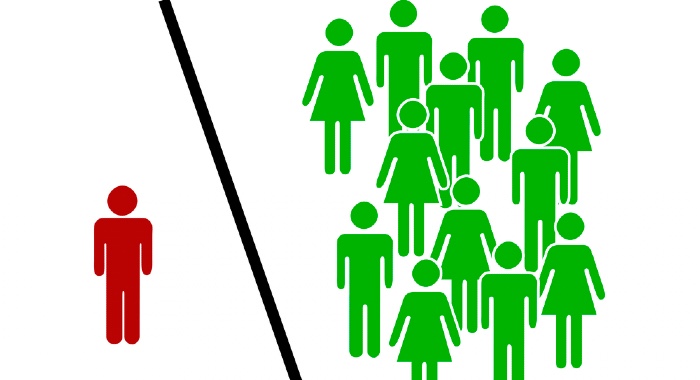
This myth is linked to the previous one, as many people who think only big companies can tackle climate change also think that one person can’t make a difference.
As we have seen, the bottom-up approach starts with the individual. And while one single action performed once won’t make a big difference, sustained small changes made consistently by one person will make a difference.
Even if the changes are small, they add over time and their impact becomes bigger. So one person can make a difference. And there is more.
What many people who believe this myth don’t seem to recognise is that we don’t live in isolation. If one person makes changes to their lifestyle to be more sustainable, they will talk to their friends, family, and colleagues about it.
This can inspire them to also make changes and you get a domino effect. That’s how cultural change starts, with a few people talking about the changes they make.
So next time you catch yourself thinking that one person can’t make a difference, remember that.
Sustainability Myth #6: If It’s Biodegradable I Can Throw It Away Anywhere

This myth is quite harmful, because it leads people to litter materials that can harm wildlife and pollute our environment.
According to the Cambridge Online Dictionary, biodegradable means that a substance breaks down naturally and in a way that isn’t harmful.
However, when it comes to biodegradable plastics, this isn’t true. According to a review study, biodegradable plastics are responsible for the release of microplastics, which are harmful to our environment. (Hu et al., 2025)
The other issue is that just because something is biodegradable doesn’t mean it will do so in any circumstances. Many biodegradable plastics won’t biodegrade in the environment, such as seawater. (Haider et al., 2018)
And because there aren’t any regulations and rules around the use of this term, it’s often used to make something, like packaging, appear more eco-friendly.
But that’s when people then think that they can just throw it away anywhere and it will break down into harmless substances.
Often it’s also confused with the term compostable, which kind of means the same thing, but it needs specific conditions to work, such as a compost heap in your garden. I have broken down the difference between compostable and biodegradable in my article if you want to know more.
So whether something is marked as biodegradable or not, it should never be littered into our environment. Another of the most common sustainability myths busted!
Sustainability Myth #7: Carbon Offsetting Makes Flying Carbon Neutral

Many people pay into carbon offsetting schemes to reduce their carbon footprint, either for specific activities, such as flying, or generally.
The idea is that a carbon offsetting scheme compensates for the carbon emissions produced by the person. Unfortunately, this means that many people believe that carbon offsetting makes flying carbon neutral. But that’s not true and here’s why.
First of all, carbon offset schemes don’t reduce the carbon emissions of your flight. It relies on reducing emissions somewhere else by activity such as tree planting. (Wong et al., 2024)
Let’s look at an example. You take a flight and pay into one of those schemes that will plant some trees to offset the emissions your flight will generate. Sounds good, but it will take decades before these trees will absorb and store carbon emissions, according to the Kent Wildlife Trust.
Besides, according to a new study, the vast majority of carbon offsetting schemes aren’t effective for several reasons: (Romm et al., 2025)
- Overcrediting – 85% of carbon offsetting schemes claim that their actives offset more carbon emissions than they actually do, according to Romm et al.
- Non-Additionality – the claim that a scheme’s activity reduces carbon emissions can’t be proven due to imperfect information and the fact that these schemes are based on hypothetical assumptions
- Leakages – if a scheme buys a forest to prevent it to be cut down for timber, the likelihood is that another forest will be cut down instead, which means the emissions are just moved from one area to another
- Durability – carbon dioxide can stay in our atmosphere for centuries, but most schemes don’t promise for their schemes to have this durability
- Double Counting – often both the seller and the buyer count the same reduction in emissions, doubling the impact on paper but not in reality
But the biggest issue with carbon offsetting schemes is that they encourage people and organisations to continue as they are, rather than reducing their emissions, which is what is really needed.
So if you want to reduce your carbon footprint, don’t buy carbon offsetting schemes, but reduce your carbon emissions.
Sustainability Myth #8: Paper Bags Are Always Better Than Plastic Bags
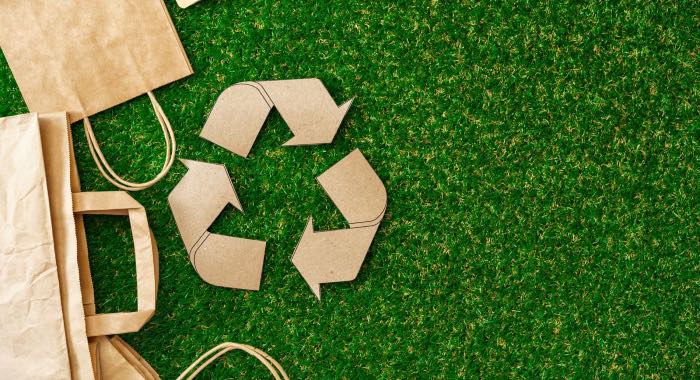
We all know that single-use plastic bags have a huge impact on the environment, which is why they have been banned, along with other single-use items, in many countries.
But many people think that paper bags are always better than plastic ones, even if they are reusable. This is probably due to the fact paper is made from wood, which is a renewable source, while plastic is made from fossil fuels, which isn’t.
And paper bags can be recycled, while plastic ones can’t. However, there is a flaw in this thinking:
- Demand for paper drives deforestation and causes pollution (Chan and Bouldin, 2024)
- The paper and pulp industry is among the most energy-intensive industries, accounting for 6% of total industrial energy use and 2% of industrial carbon emissions (Del Rio et al., 2022)
- Paper can only be recycled a few times before the fibres become too short to produce good quality paper
As you can see, paper bags aren’t as environmentally-friendly as you might think.
When it comes to sustainability, reusability is much more important than the material. A plastic bag that can be used again and again for years to come, is a greener option than a paper bag that can only be used a few times.
Sustainability Myth #9: Plastic-Free Living Means Eliminating All Plastic

When we hear the term plastic-free living, many think that it means they have to eliminate all plastic from their lives. This is a huge ask, so it puts many people off to even attempt it.
But that’s not what it means at all. Especially, because it would be impossible in today’s world to live 100% plastic-free. Plastic is everywhere, in your car, house, wardrobe, phone, kitchen, etc.
And it’s no surprise given that in 2022 the world produced 400 million tons of plastic (Piapitiya and Ratnayake, 2024) and the trend is upwards.
So what does it mean to live plastic-free? Well, it means to reduce the amount of unnecessary plastic you buy and use. This could be through reducing plastic packaging or moving away from single-use and disposable plastic items.
But it also means to reduce the amount we buy full stop. Rather than asking “Is there a plastic alternative?”, ask “Do I need this item at all?”
And sometimes you might replace a single-use plastic like cling film with silicon lids, which are still plastic, but reusable.
Plastic-free living isn’t about perfection, it’s about making a difference, no matter how small. I like to look at it in terms of achievements.
Reducing the amount of plastic waste I produce by buying fruit and veg lose to avoid plastic packaging, switching to reusable cleaning cloths from single-use wipes, carrying a reusable bag to avoid plastic bags, etc.
Reducing my plastic consumption by only buying embracing slow fashion, repairing rather than replacing, stopping to buy plastic ornaments I don’t really need, stopping to buy gadgets I won’t use, etc.
Crucially, plastic-free living is a journey that will take years and years and years. You make one small change at a time and in due course all the small changes will make a big impact.
Sustainability Myth #10: Compostable Means It Will Break Down Anywhere

This is another myth that has probably come about through confusion with terms used. However, when it comes to compostable, there is actually regulation in place in most countries that defines what it means.
Basically, a material that is compostable will turn into compost under certain conditions. The last bit is the important one.
If you throw a banana skin on the pavement it will break down, but it won’t compost. This will only happen if you throw it onto your compost heap in the garden.
Even though it won’t become compost, it also won’t do any harm to the environment. But that doesn’t mean that you can throw away anything that says it’s compostable.
Because there are two types of compostable materials: home compostable and industrial compostable. The banana skin is the in the first group.
The second type are human-made materials, such as compostable plastics. And that’s where the issues start.
If a plastic is compostable in an industrial facility, it means that it will turn into compost under the right circumstances. But if littered into the environment it might break down very slowly or not at all, and release microplastics, according to European Environment Agency.
So basically this means that compostable plastics are just as harmful as conventional plastics if not disposed of correctly.
Materials can only be marked as compostable, if they are certified by Renewable Energy Assurance Limited (REAL), a non-profit organisation.
There are two certificates, one for materials that can be composted at home and ones that need to be composted in an industrial facility. The latter will harm the environment if littered.
Knowledge Is Power
Living a more sustainable life can feel overwhelming and tricky, with so many myths swirling about. Knowing what’s fact and what’s fiction will ensure that you adopt sustainable practices that are truly better for the environment.
With these 10 common sustainability myths busted, you can be sure not to fall for them any more.
If you need some help on your journey to become more sustainable, we have you covered. These article will help you to make sustainable practices part of your daily routine without overwhelm or the need to change your life completely:
- Green Living: Developing A Sustainability Mindset Without Getting Overwhelmed
- Eco HomeLife Explains: How To Become A Conscious Consumer In The UK
- Eco HomeLife Explains: What Does It Mean To Live Plastic-Free
Your journey starts here! Live more eco-friendly one small step at a time.