Many people want to live a more sustainable life, but aren’t sure where to start. Or they are put off because they think it’s difficult or expensive. But it’s simpler than you might think.
Here at Eco HomeLife we have made it our mission to encourage and support anyone to reduce their impact on the environment.
That’s why we have created this FAQ page, to provide a resource that accompanies you on your journey to a more sustainable live. You can come back to it whenever you need to.
Let’s make sustainable living work for you, without complications or overwhelm.
Getting Started
As with most things, making the first step can be the most difficult part. Especially when it comes to lifestyle change.
Most people get overwhelmed when they think about making changes to the way the live their lives, even if they’re keen to make changes. So in the following 4 questions we tell you everything you need to know to get started, the stress-free way.
1. How Can I Start Living A More Sustainable Lifestyle?

With one small change. The biggest mistake people make is that they try to change everything at once, which can make it overwhelming and leads many to give up.
What you have to remember is that living a more sustainable life is a journey that takes years. You start with one small change, like leaving a small patch wild in your garden or air drying as much of your laundry as possible.
The change has to be small enough to easily fit into your life without making things more time-consuming or difficult. Once the small change becomes part of your routine, you make another one, and then another one, and so on.
Over time, you will turn your lifestyle greener and greener without feeling overwhelmed or inconvenienced. What you are doing is developing a sustainability mindset that will bring eco-friendly living more and more to the forefront of your mind.
Still not sure where to start? Then our guide “Small Changes, Big Impact” is perfect for you. It’s packed full of practical advice you can start following straight away. Download your copy for free now.
2. Can Small Changes Really Make A Difference?
Small changes might feel like a drop in the ocean that can’t really make a difference. And if you only make one small change once, then it will have a very limited impact.
The key here is consistency. Using a reusable bottle once instead of buying a drink in a plastic bottle will only have a very small impact. But if you consistently take your reusable drinks bottle with you, you prevent the use of hundreds, maybe even thousands of plastic bottles.
And that will make a difference. It’s the same story with other small green changes. Buying fewer things, walking or cycling instead of driving, air drying your laundry more often are all small actions, but by repeating them regularly, their impact grows.
The thing about small changes is that if you stick to them, they become habits that will make a difference over time.
Studies have shown that small but consistent changes can have measurable beneficial impacts on the use of resources. (Vivek et al., 2021) So even small actions to save water, for example turning off the tap while brushing your teeth, will make a difference if practiced consistently over a long time.
So yes, small changes can make a difference, if you’re consistently making them.
We have put together a handy guide to show you how you can create a sustainability mindset for a greener life by starting small and building on it.
3. What Changes Have The Biggest Environmental Impact?

To answer this question, we have to look at what has biggest negative impacts. According to a report by the Intergovernmental Panel on Climate Change (IPCC), transport, energy and food are the areas where the biggest impacts can be made.
That’s because these areas contribute the most to our individual carbon footprint, meaning that’s where we’re responsible for the biggest amounts of carbon emissions.
This means that there are some small changes you can make that will make a bigger difference than others. (Wynes and Nicholas, 2017) These include:
- Using your car less – walk, cycle or use public transport where possible
- Flying less
- Turning down the temperature of your water boiler by 1°C
- Turning down the heating – but still staying within healthy and comfortable levels
- Reducing the use of appliances – like air drying instead of using a tumble drier
- Adapting a more plant-based diet – eating less meat, becoming vegetarian or even vegan
Whatever changes you decide to make, the important thing is that you stick with it. The accumulative effect of any changes made over a longer period of time will increase their impact.
4. How Can I Live More Sustainably Without Spending More Money?
There is a general misconception that living a more sustainable life is expensive. It’s one of the most common myths about sustainability. It comes from the belief that sustainable living means replacing everything with eco-friendly products.
But that’s green consumerism, which isn’t the same as living sustainably. The core principles of sustainable living won’t cost you any money, far from it. In fact, they will save you money.
The 3 Rs (reduce, reuse, recycle) are generally seen as the pillars of sustainability. However, there are many other sustainability frameworks out there using 4 Rs, 5 Rs, 9 Rs, etc. (Zorpas 2024)
We have thoroughly researched this topic and this 5-R framework can help you live more sustainably and you won’t have to spend more money:
- Rethink – rethinking our behaviours and habits is the first crucial step of living a more sustainable life
- Reduce – buying fewer things, using less energy, using less water, producing less wate, etc.
- Repair – repairing rather than replacing clothes, furniture, appliances, gadgets, etc.
- Reuse/Repurpose – using what we already have and repurposing things instead of buying new
- Recycle – what can’t be repaired, reused or repurposed should be recycled
As you can see, the core principles of sustainability all encourage habits that don’t need more money. On the contrary, they’ll actually help you spend less.
Buying And Consumption

We live in a consumerist society, where we are constantly told to consume more. Clever marketing makes us believe that only by buying this and that can we achieve what we want.
This leads to overconsumption, which has a huge impact on the environment in terms of waste, demand on resources, as well as the impact of manufacturing processes, such as pollution. (Princen, 1999)
So when it comes to buying and consumption, a shift is needed if we want to live more sustainably.
5. How Can I Shop More Sustainably?
By shifting to mindful consumption and becoming a conscious consumer. This involves three core principles:
- Think before you buy
- Avoid impulse purchases
- When you buy, buy according to sustainability values
Let’s look at these 3 principles in a bit more detail.
1. Think Before You Buy
Ask yourself, why do you want to buy something. Do you need it? Have you seen it on an advert on telly or social media? Are you just doing a bit of retail therapy?
Establishing why you want to buy something will quickly show you, whether to buy something or not.
If you still want to buy it, ask yourself if you already have something that you could use. Finally, consider what would happen if you din’t buy it.
2. Avoid Impulse Purchases

Unplanned purchases, where you see something and decide then and there to buy it, account for 20% of online purchases. (Repko 2020)
More often than not, the things bought aren’t really needed and end up becoming waste eventually. As such, they have a huge impact on the environment and avoiding them as much as possible is part of sustainable shopping.
The easiest way to do it is to putting a 24-hour cooling-off period in place. That simply means that you wait a day before making the purchase. In most cases, you won’t want to buy it anymore after this period.
3. Buy Sustainably
Finally, we come to the things you do buy. As a conscious consumer you try to buy sustainably. This means you look for:
- Sustainable businesses – who make/sell sustainable products, have sustainable supply chains and processes, and include sustainability in their policies
- Sustainable products – alternatives to regular products that have a lower environmental impact
- Sustainable packaging – zero-waste, plastic-free, from recycled materials and recyclable
We dig deeper into this topic in our guide about how to become a conscious consumer.
6. Are Sustainable Products Always Better For The Environment?

Not necessarily. It will depend on various factors and often the most sustainable product is the one you don’t buy.
The most important factor is why you want to buy the sustainable product in the first place. It won’t be better for the environment if:
- The item you’re replacing is still usable, but you prefer to use an eco-friendly alternative – this will create unnecessary waste – it’s better to keep using the old item until it needs to be replaced
- You’re buying something you don’t really need – any unnecessary purchases waste money and resources, even if the products are sustainable
Living a more sustainable life isn’t about replacing everything with eco-friendly alternatives. Instead it’s about being more mindful about what and how much we buy and moving away from the ways of our consumerist society. Because consumerism can never be green. (Grant, 2011)
Other factors that determine whether a sustainable product is better for the environment are:
- Is it reusable? – single-use items create a lot of waste and use a huge amount of resources, even if the materials are sustainable – reusable items are better for the environment
- How long can it be used for? – an item made from sustainable materials that has to be replaced more often than, let’s say a plastic equivalent, will be less environmentally friendly – it produces more waste and uses more resources
- How is it disposed of? – some green materials have to be disposed of in the general waste bin, such as bioplastics and industrial compostable materials – this creates waste
So while sustainable products can be better for the environment, this isn’t always the case. Not buying a product or using something you have already got is the greener option.
If you want to know more about why replacing everything with eco-friendly products isn’t as sustainable as it might seem, read our article about green consumerism.
7. Is Buying Less Better Than Buying Eco-Friendly Products?
Yes, is the simple answer. The key to sustainable living is to reevaluate our impact on the environment and adjust our behaviours.
Living in a consumerist society means that we are conditioned to be materialistic and buy things for the sake of it, or better: to buy things to make profits for companies.
In the past, consumption was based on needs, with needs defined as necessary for survival. But industrialisation brought a shift from consumption for needs to desire, which led to overconsumption. (Saltik et al., 2013)
Producing goods to make a profit rather than fulfil a real need has resulted in overuse of vital resources, as well as the creation of huge amounts of waste, which is bad new for our environment.
By considering why want to buy something and reducing unnecessary purchases we can make a much bigger difference than by just buying eco-friendly alternatives.
We have looked at conscious consumption in more depths in our article about becoming a conscious consumer.
8. How Can I Avoid Greenwashing?

Because more and more people are conscious of environmental issues, many are prepared to pay for products that are sustainable (Grimmer and Bingham, 2012). And this has led many companies to make unsubstantiated green claims about their products to cash in on conscious consumers.
So the first step to avoid greenwashing is to be sceptical about any green claims that are made. Just stopping and questioning these claims will already help you to avoid greenwashing in many cases.
But here are other things to look out for to make sure you aren’t falling for it:
- Be wary of buzzwords – “green”, “natural”, “eco-friendly”, “sustainable”, etc. are often used by greenwashing companies to make their products look environmentally friendly
- Look for proof – any green claims should be substantiated on the company’s website with clearly stated evidence
- Stay away from “green ranges” – if a company offers a green range and sells unsustainable products at the same time they just want to cash in
- Environmental certificates – certification by organisations such as B-Crop, FCS, One Planet Living, or Planet Mark can be a good indication for a sustainable product
Many greenwashing techniques can be clever, to be on your guard and ask questions before buying.
We dive deeper into this topic in our guide about greenwashing.
9. Is Second-Hand Shopping More Sustainable?
The answer to this question isn’t as simple as it might seem: it’s yes and no.
Yes, because keeping usable items in circulation has benefits for our environment:
- Reduces demand on resources – buying second-hand items means fewer new products need to be made
- Reduces pollution and carbon emissions – many manufacturing processes have a huge environmental impact, so producing less is better
- Reduces waste – it keeps unwanted items out of landfill
However, even when buying second-hand, mindful consumption is key. According to Oxfordstudent, shopping preloved items can become just as addictive as any type of shopping, leading to overconsumption.
And the fact that the second-hand market is continuously growing, is a sign of that. The problem is that if demand for preowned items is getting bigger and bigger, a steady stream of new items is needed to feed this demand, reducing the sustainability of second-hand shopping.
But there is another issue at play. A study has shown that many people who buy second-hand clothing also buy more new clothes. (Mizrachi and Sharon, 2025) So rather than replacing the purchase of new items, it can become an addition, increasing overconsumption.
Shopping second-hand has to be combined with mindful consumption, where you don’t buy for the sake of it but because satisfy a need. Then, and only then, second-hand shopping is sustainable.
Home
Our homes play a big part in our lives, so living a more sustainable life should include a more sustainable home.
There are ways we can change our behaviours and routines at home that can make our homes more eco-friendly.
10. How Can I Make My Home More Sustainable?
According to the University of California, the largest amount of greenhouse gas emissions globally come from heating and electricity. So one way to make your home more sustainable is to decarbonise it as much as possible.
This means installing a sustainable heating system, such as a heat pump, and generating your won renewable energy with solar panels and a battery. However, this involves high costs, which isn’t feasible for everyone.
So here are other ways you can make your home more sustainable that will make a difference without the need to spend a lot of money:
- Reduce the amount of energy you use – turning down the thermostat for heating and hot water by a degree, switch to energy saving light bulbs, switch off lights when not needed, use appliances less, etc.
- Tackle food waste – only buy what you need, plan your meals in advance, use up what you have, preserve what you can’t use, etc.
- Create a zero-waste home – buy fruit and veg individually to avoid unnecessary packaging, use refill-shops if near-by, move away from single-use and disposable items, etc.
- Turn your daily routines green – sustainable laundry routine, eco-friendly cleaning routine, greener beauty routine, etc.
- Start repairing instead of replacing – learn to repair clothes, appliances, gadgets, furniture, etc.
- Use what you have – reuse and repurpose instead of buying new
While these actions individually have a smaller impact, taken together and practiced over a long period of time, they will make your home much more sustainable.
11. How Can I Reduce Plastic Waste At Home?
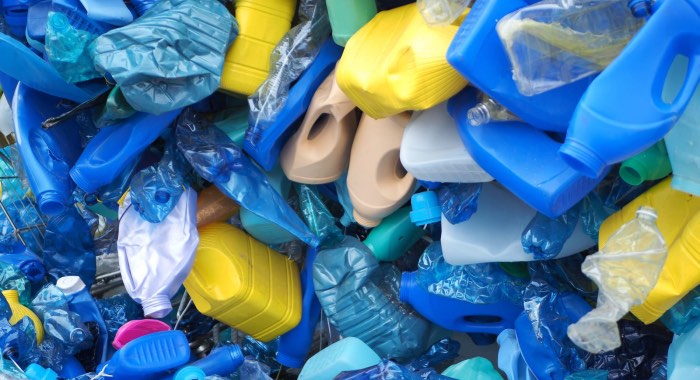
Plastic waste has a huge impact on our environment and human health (Pilapitiya and Ratnayake, 2024). So reducing the amount we are producing is vital if we want to live more sustainably.
The most impactful way to reduce plastic waste at home is to reduce the amount of plastic we consume. This doesn’t mean ridding our home of all plastic, because that would be very difficult, if not impossible.
Instead, it means being more mindful of the materials we buy. As and when you need something new, try to find a plastic-free version, for example, clothes made from sustainable materials instead of polyester and co.
This will reduce the amount of plastic waste in your home naturally over time.
But there are also things you can do that have a more short-term, immediate impact:
- Reduce the amount of plastic packaging in your home
- Move away from disposable and single-use plastic items
- Reuse and repurpose plastic items as much as possible to keep them out of landfill
- Donate or sell usable but unwanted plastic items
- Recycle as much plastic as possible
We have looked at plastic-free living in more detail in our article, so head over if you want to know more.
12. What Are The Most Sustainable Alternatives To Everyday Household Products?
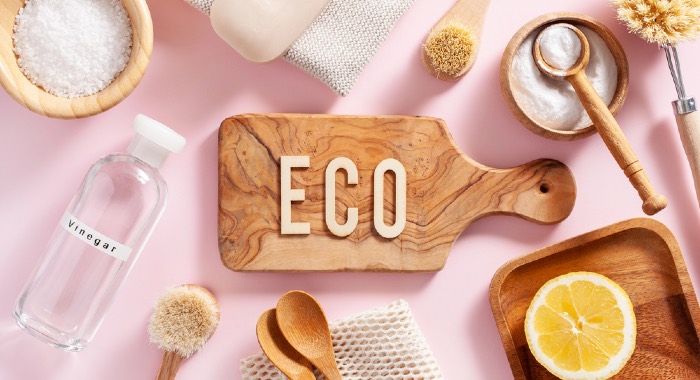
Finding sustainable alternatives to every-day products can feel a bit daunting, especially with so many companies engaging in greenwashing. I have done a lot of research into eco-friendly products and these are the factors I look at:
- Buy from a sustainable company – this means a business that has sustainability at the heart of what they do – including sustainable supply chains
- Buy as local as possible – ideally you want products that have been sourced, made and are sold from the UK, or possibly Europe
- Look for sustainable materials/ingredients – choose natural ingredients over synthetic ingredients and sustainable materials over artificial materials
- Choose reusable items where possible – the longer and more often you can use a product that better it is for the environment
- Sustainable packaging is a must – look for zero-waste, plastic-free, or at least recyclable packaging
I have tried, tested and reviewed many sustainable products over they years, to help people like you to make the right choices. Here are some of my top eco picks of everyday household products to get you started:
- Best Eco-Friendly Cleaning Products
- Best Sustainable Electronic Toothbrush Heads
- Best Eco-Friendly Shampoo Bars
- Best Compostable Cleaning Sponges
- Best Sustainable Makeup
- Best Natural Deodorants
Food And Lifestyle
In order to live a more sustainable life, we have to look at all aspects of our lives, including our food and lifestyle.
While there is no need to make drastic changes, there are ways to reduce the impact our diet and lifestyle has on the environment.
13. How Can I Make My Diet More Sustainable?

According to research, meat production accounts for 57% of global greenhouse gas emissions. (Xu et al., 2021) As a result, many people suggest that sustainable diet means becoming vegan.
However, while a vegan diet has the lowest environmental impact, reducing meat consumption to no more than 50g per day will reduce your diet’s greenhouse gas emissions by almost 50%. (Scarborough et al., 2023)
So reducing the amount of meat you eat will have a significant impact, without changing your diet completely. We have done that, but rather than eating meat every day, we have two main meals and a lunch with meat.
You can read more about why meat has such a big environmental impact in our article about meat consumption and the environment.
Apart from reducing your meat consumption there are other things you can do to make your diet more sustainable:
- Eat seasonally – eating what’s in season means a lower carbon footprint
- Buy what’s produced locally – whenever possible buy what’s been grown or bred as local as possible
- Eat more variety – eating a variety of different foods (plants, seafood, meat) will increase the biodiversity of the foods produced
- Choose sustainably sourced fish and seafood – MSC is the certificate to look for
- Grow your own food – even just a few plants can make your diet more sustainable
- Reduce food waste – waste from food is responsible for a huge amount of carbon emissions
As you can see, it’s not necessary to make huge changes to your diet to make it more sustainable.
14. How Can I Reduce Food Waste?

According to our OurWoldInData, food waste is responsible for 6% of global greenhouse gas emissions. But it also means we’re wasting the emissions that have been released during production, making food waste reduction a vital part of sustainable living.
So here are things you can do to reduce food waste in your home:
- Only buy what you need – make a shopping list and stick to it
- Make a meal plan for the week – knowing what you will eat means you know exactly what you need and will use
- Make ‘leftover meals’ – get creative and make a meal out of what you have left this week
- Freeze leftovers – if you have cooked more than you can eat, freeze the rest for another day
- Check your fridge regularly – this will make sure you won’t miss a food that needs eating
- Preserve what you can’t eat – pickle, dry, ferment, freeze, or make jams and chutneys
- Don’t peel that doesn’t need it – you can eat the skin of carrots, beetroots, parsnips, potatoes, kiwi, and many more
- Start a compost heap – if you have a garden, compost your food scraps
Cutting down on food waste isn’t just better for the environment, but it will also save you money.
If you want more ways to reduce waste, check out our 5 zero-waste living ideas for inspiration.
15. How Can I Travel More Sustainably?
According to data by The Office for National Statistics, transport is responsible for almost half of the carbon emissions by an individual. These are caused by driving petrol or diesel cars.
So in order to travel more sustainably, it’s necessary to reduce how often we use our cars. Buying an electric vehicle can bring down those emissions by a lot, but it involves high costs.
There are other ways you can travel more sustainably without investing a lot of money:
- Walk and cycle more for short distances – those two transport methods have zero emissions and are good for your health
- Use the bus for regular journeys – many buses are now electric, but even those with combustion engines will reduce your carbon emissions
- Use the train for longer journeys – running on electricity, trains have lower emissions than cars
- Consider car share – if public transport isn’t available, this is a way to reduce your emissions
We are far too fond of jumping in our cars for every journey. By being more mindful and shifting to less carbon-heavy transport methods we can make our travel more sustainable.
Sustainable living doesn’t have to be expensive, feel overwhelming, be complicated or mean changing your lifestyle completely. Small changes can have a big difference if they are made consistently and you and build on them over time, to further increase your positive impact.